BEYOND THE BEATEN BOULEVARD
Two Roads Diverged: Just Us Neighbors & Inman Park
Atlanta’s smallest neighborhood and its very first suburb
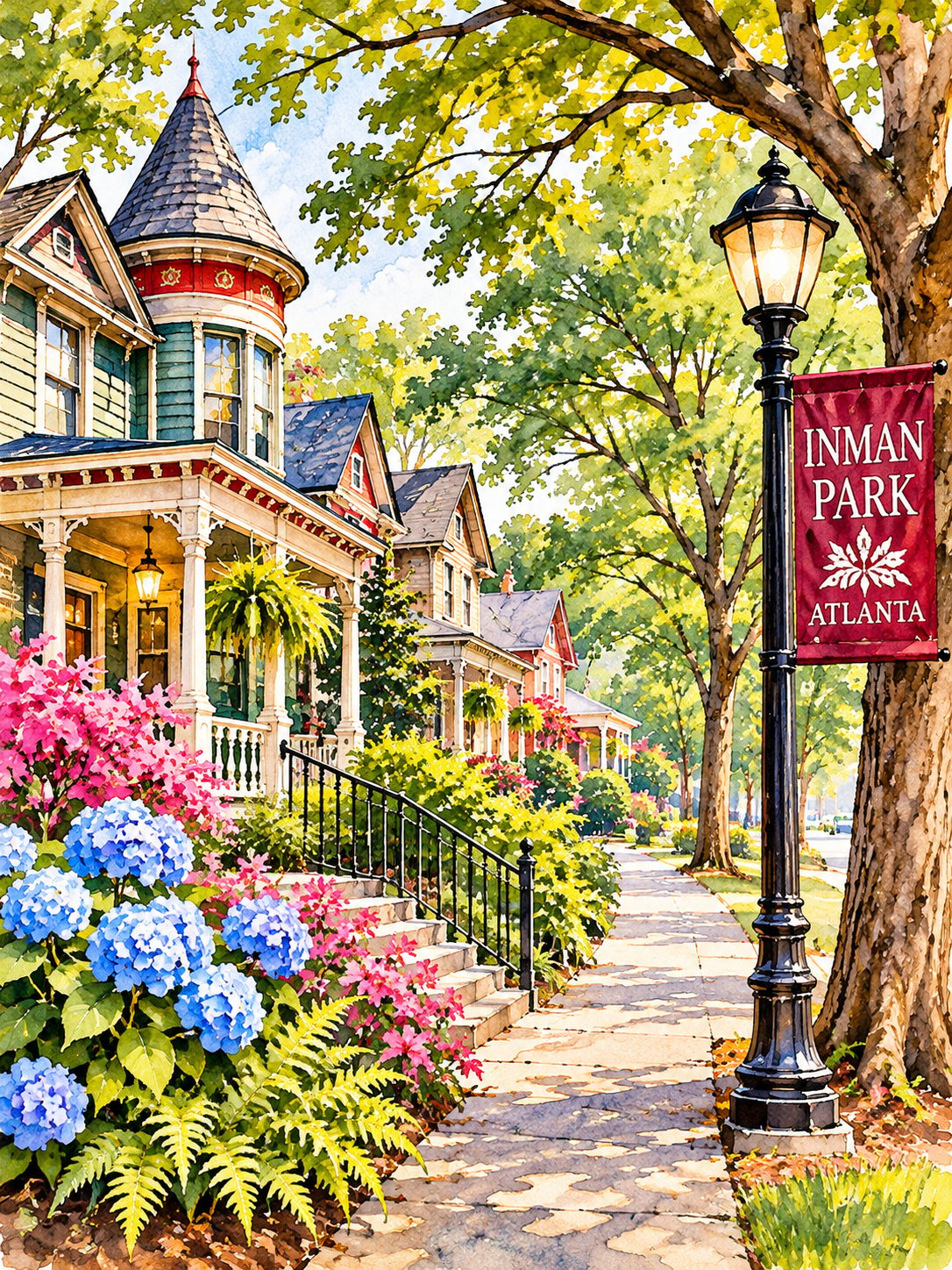
Robert Frost told us that two roads diverged in a yellow wood. In Atlanta, this time, they diverge about six miles apart. Head west and you’ll find a single loop of brick homes so small most Atlantans have driven past it for decades without knowing it was there. Head east and you’ll land on the curving, tree-lined streets of the city’s first planned suburb, where Victorian turrets peek through the oaks and a butterfly flag flutters from half the porches.
On paper, these two could not be more different. One is the smallest official neighborhood in Atlanta. The other is the one that started the whole idea of an Atlanta suburb. One was built by Black professionals during Jim Crow because nobody else was going to build it for them. The other was built for the city’s wealthiest families by a developer with a streetcar and a dream. But spend an afternoon in each, and you’ll notice they share something stubborn: both have been told, more than once, that progress needed to roll right through them. And both, in their own way, answered no, thank you.
My Hoptown upbringing taught me that the best stories are usually found on the road your mama told you not to bother with, and twenty-plus years of studying Atlanta’s 244 neighborhoods has only confirmed it. So pour something sweet, and let’s take both roads.
PART ONE: JUST US NEIGHBORS
Two Streets, One Loop, and a Legacy Bigger Than Its Map
A Color Line Called Ashby Street
To understand Just Us, you have to start a few blocks east, at a street that used to be called Ashby and is now Joseph E. Lowery Boulevard. Before 1919, Ashby Street functioned as an unofficial color line on Atlanta’s Westside. That year, the city designated Washington Park as the first recreational park for Black Atlantans, and the Board of Education re-designated the Ashby Street School for Black students. In 1924, Booker T. Washington High School opened as Atlanta’s first public high school for Black students, and it stayed the only one for more than two decades. Brick by brick, the Westside was becoming the cultural, educational, and political heart of Black Atlanta. It needed homes worthy of the people building it.
Land From a College, and a Bold Idea
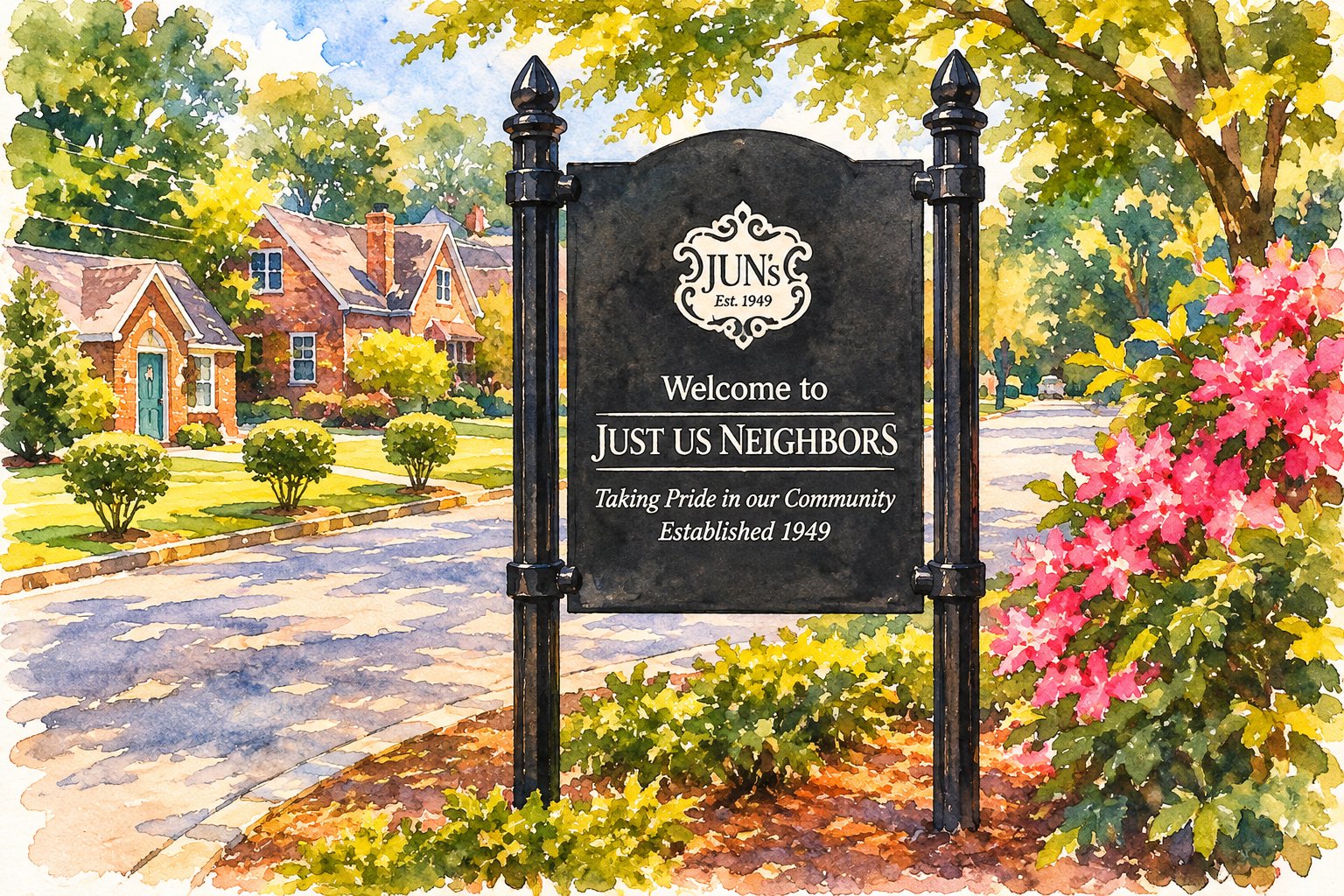
In the 1940s, at the height of Jim Crow segregation, a group of Black business leaders bought land from Morris Brown College, the AME Church’s college and the only school in the Atlanta University Center founded by Black Americans. Their plan was simple and radical at the same time: pool their resources, buy the ground, and build a self-sustaining neighborhood of their own. The result was a single residential loop of two streets, Fountain Drive and Morris Brown Drive, lined with sturdy brick homes, many in the Tudor style, built mostly between the early 1940s and the mid-1950s. It is recognized today as the first Black-owned, Black-developed subdivision in the city of Atlanta.
A Club Becomes a Name
The neighbors organized almost immediately. In the late 1940s they formed the Fountain Drive–Morris Brown Drive Community Club, which is a mouthful even by Southern standards. By the early 1950s the community had settled on something shorter and far more memorable: Just Us. No one has ever written down exactly why, but consider the timing. Just over the hill in Mozley Park, white homeowners formed a "protective association" in 1949 to stop Black families from buying homes there. On Fountain and Morris Brown, nobody had to ask permission. Long-term residents still put it plainly: it’s just us folks living here. I can’t think of a prouder name for a neighborhood.
Educators, Doctors, and Holiday Lights
Over the following decades, Just Us drew educators, doctors, and civic leaders, the kind of neighbors who mowed on Saturday and organized on Sunday. Its gardens were good enough to land the neighborhood on Atlanta’s Dogwood Trail tour, and its decorations put it on the city’s Christmas lights tour route. Residents pushed back against redlining and against the highway projects that bulldozed so many other Black communities across Atlanta. They tended two tiny triangular parks, dedicating one to their first president and the other to President John F. Kennedy. Small? Absolutely. Sleepy? Never.
The Fight to Stay Just Us
Today, families like the Jetts are still here. AJ Jett III is a third-generation resident whose grandfather built a home on the loop in the late 1940s, and he now lives there with his own wife and daughter. But tiny neighborhoods are easy to erase, and residents have watched development pressure creep across the Westside. On Monday, September 22, 2026, the Atlanta City Council voted to begin the process of designating Just Us Neighbors a historic landmark. Resolution 26-R-3993 directs the Urban Design Commission to study the neighborhood and draft a permanent historic overlay, with public hearings before a final vote. As longtime homeowner Gee Willis put it, "We don’t need to lose history." Amen.
Five Things Most Atlantans Don’t Know About Just Us
1. The streets are a love letter to a college. Morris Brown Drive honors the college that sold the land. And Fountain Drive shares its name with the Fountains, Bishop William A. Fountain Sr. and his son William A. Fountain Jr., who between them led Morris Brown College for most of the years from 1911 to 1950. Historic Fountain Hall on the Morris Brown campus is named for the bishop.
2. Its first president once led one of America’s most storied sororities. Margaret Davis Bowen was the first president of the Just Us neighborhood association. Before she moved to Atlanta in 1948, she served as national president of Alpha Kappa Alpha from 1936 to 1939. A civil rights activist and educator, she also has a frozen custard recipe preserved in The Historical Cookbook of the American Negro. Park I on Fountain Drive is dedicated to her.
3. There’s an eternal flame hiding in plain sight. Park II, the neighborhood’s second triangular park, is dedicated to President John F. Kennedy. It holds an eternal gas-light flame and a plaque honoring Dr. Martin Luther King Jr.
4. Your history teacher’s favorite statue is around the corner. Booker T. Washington High School sits at the neighborhood’s doorstep. The statue at its entrance, Booker T. Washington Lifting the Veil of Ignorance by Charles Keck, was erected in 1927 and is the only exact replica of the original at Tuskegee. Dr. King walked past it as a student, as did Lena Horne and Maynard Jackson.
5. Locals whisper about the "Blood House." Historians who lead walks through Just Us tease a landmark known only to those in the know: the infamous Blood House. They don’t explain it in writing, and neither will I. Some stories you have to earn by walking the loop with someone who knows.
Where to Pull Up a Chair
Just Us is all homes and no storefronts, which is exactly how the neighbors like it. But two of Atlanta’s most important tables sit just down Martin Luther King Jr. Drive, the old Hunter Street, and both opened in 1947, the very same era Just Us was taking shape.
The Busy Bee Café
In 1947, a self-taught cook from Carrollton named Lucy Jackson opened a tiny café on Hunter Street because everyone already wanted her fried chicken. During the civil rights movement, the Busy Bee became a gathering spot for leaders including Dr. King and Hosea Williams. In 2022, the James Beard Foundation named it one of America’s Classics, and the Michelin Guide has since given it a Bib Gourmand. Order the fried chicken, candied yams, and collards, and save room for cobbler. Today it’s takeout only, so plan a picnic in Washington Park.
810 Martin Luther King Jr. Dr. SW, Atlanta, GA 30314 · (404) 525-9212 · thebusybeecafe.com · Daily 11 a.m.–7 p.m.
Paschal’s
Brothers James and Robert Paschal opened a 30-seat luncheonette selling sandwiches and sodas on West Hunter Street in 1947. It grew into one of the most important restaurants in American history: the place where Dr. King, Ralph David Abernathy, Andrew Young, and John Lewis planned strategy, and where the brothers kept the doors open all night as a safe haven for activists coming home from jail. Since 2002, Paschal’s has served its famous fried chicken from Castleberry Hill. Order the chicken, and say a quiet thank-you to the people who ate there before you.
180 Northside Dr. SW, Atlanta, GA 30313 · (404) 835-0833 · paschalsatlanta.com · hours vary
Where the Treasures Hide
Shrine of the Black Madonna Cultural Center & Bookstore
Opened in 1975 alongside the Shrine of the Black Madonna church, this West End institution has spent half a century promoting knowledge of African and African American heritage and art. Expect deep shelves of Black literature and history, plus jewelry, art, and gifts from local makers, with occasional jazz-and-books evenings. If you walk out empty-handed, you weren’t really trying.
946 Ralph David Abernathy Blvd. SW, Atlanta, GA 30310 · (404) 549-8676 · hours vary
Portrait Coffee
As a Realtor, I could not resist this one. Portrait Coffee, a Black-owned roaster run by West End locals, operates out of the Lottie Watkins Building. Watkins was Atlanta’s first Black woman licensed as a real estate broker, a civil rights activist, and a Georgia state legislator, and she worked from this very building for five decades. Grab a pour-over, then take home a bag of beans, a candle, or a shirt. A historical marker honoring Watkins stands by the patio.
1065 Ralph David Abernathy Blvd. SW, Unit A, Atlanta, GA 30310 · portrait.coffee
Walk the Loop, Then Walk the History
My favorite way to experience Just Us is on foot. Start at Booker T. Washington High School and pay your respects to the Lifting the Veil statue. Then stroll the Fountain Drive and Morris Brown Drive loop, about a mile and change round-trip, and look for the two little triangle parks, the Kennedy flame, and the King plaque. Finish at Washington Park, Atlanta’s first park for Black residents, and hop onto the Westside BeltLine Trail if your legs have more to give. If you’d rather have a guide, keep an eye out for the next Jane’s Walk led by historian Cynthia Jennings and Archive Atlanta, which toured Just Us in May 2026. One request: these are private homes and very real neighbors. Wave, smile, and keep your voice to a porch-visit volume.
Start: Booker T. Washington High School, 45 Whitehouse Dr. SW, Atlanta, GA 30314 · The route has no sidewalks and a short, steep hill at the main entrance
PART TWO: INMAN PARK
Atlanta’s First Suburb and Its Most Stubborn Comeback
A Battlefield Before a Suburb
Long before anyone sipped a cortado on North Highland Avenue, the ground beneath Inman Park was a battlefield. On July 22, 1864, the Battle of Atlanta raged across land that is now Inman Park, Reynoldstown, Little Five Points, and their neighbors. Confederate troops broke through the Union line near an unfinished brick plantation house on what is now DeGress Avenue, and the fighting there became the centerpiece of the famous Cyclorama painting. When peace came, the land sat scarred and quiet, waiting for someone with a bigger vision.
Joel Hurt’s Streetcar Dream
That someone was Joel Hurt, a civil engineer and developer who envisioned a rural oasis for wealthy Atlantans, connected to downtown by something the city had never seen. Through his East Atlanta Land Company, he gathered more than 130 acres east of the city and named the suburb for his friend and business associate Samuel Inman. In September 1888 he opened Edgewood Avenue to connect it to downtown, and in August 1889 his company began running Atlanta’s first electric streetcar line, for a five-cent fare. Landscape designer James Forsyth Johnson laid out curving streets and generous green space, with the ten-acre Springvale Park as the crown jewel. Olmsted’s firm was later hired to improve it in 1903.
Coca-Cola Royalty, Then a Long Slide
The first lots sold in 1889, and Atlanta’s elite came running. Asa Candler, the man who built Coca-Cola, built the grand Beaux-Arts Callan Castle at Euclid and Elizabeth. Ernest Woodruff built his home a few blocks away. Two former governors moved in, along with a who’s who of Atlanta business. But by the turn of the century, shinier suburbs like Druid Hills and Ansley Park were luring buyers away. Big lots were carved into small ones, zoning restrictions lapsed in 1910, and the automobile made the streetcar suburb feel old-fashioned. After a citywide rezoning in 1954, absentee landlords chopped the grand Victorians into cheap boardinghouses. As one restoration pioneer later put it, "The fabric of the community had disintegrated."
Robert Griggs and the Urban Pioneers
In 1969, when things looked their worst, an Atlanta designer named Robert Griggs bought a crumbling Queen Anne Victorian on Euclid Avenue and restored it. Young professionals followed, and they were soon dubbed "urban pioneers." In 1970 they founded Inman Park Restoration. By 1972 they had secured low-density residential zoning, and dozens of houses were being saved. In 1973, Inman Park was listed on the National Register of Historic Places. To raise money and attention, the neighbors threw a little festival in the early 1970s. It never stopped.
The Highway That Never Came
Then came the bulldozers, or at least the plans for them. The Georgia Department of Transportation proposed an elevated highway, part of the I-485 and Stone Mountain Tollway plans, that would have sliced through Inman Park and its intown neighbors. Homes were demolished in preparation, and the entire neighboring community of Copenhill disappeared. Inman Park fought back with lawyers paid for by festival funds, and in the end an environmental impact study persuaded the U.S. Department of Transportation to pull federal money. The highway died. Today, Inman Park counts about 300 homes, the Eastside BeltLine at its doorstep, and one of the best collections of late 19th-century residential architecture in Atlanta. Not bad for a neighborhood that was nearly paved over.
Five Things Most Atlantans Don’t Know About Inman Park
1. The Cyclorama’s big moment happened here. The plantation house of George M. Troup Hurt was begun in the summer of 1862, never finished, and never lived in. The fierce fighting around it on July 22, 1864, is the central scene of the Cyclorama, now at the Atlanta History Center. A historical marker on DeGress Avenue marks the spot, a short walk from the Inman Park MARTA station.
2. Coca-Cola changed hands between Inman Park neighbors. Asa Candler lived at Callan Castle until 1916. In 1919, after he gave most of his Coca-Cola stock to his children, they sold their shares to investors led by Ernest Woodruff, who had lived just around the corner on Euclid Avenue. The two men who bookend Coca-Cola’s early history were practically over-the-fence neighbors.
3. Krog Street Market got its name change by swapping two letters. The old Atlanta Stove Works, a pot-belly stove factory that opened in 1889, became the Atlanta Stage Works in the early 1990s, a film and media center. It housed the early Tyler Perry studios and, for a time, the National AIDS Quilt. Today, it’s Krog Street Market.
4. That butterfly has two faces. Look closely at the butterfly flags all over the neighborhood. Resident Ken Thompson designed the symbol in 1970 for the first festival. Each wing holds the silhouette of a face: one looking to the past, one looking to the future.
5. The founder’s fortune has a dark side. Joel Hurt’s wealth came from real estate, streetcars, insurance, and mining, and much of it relied on Georgia’s convict lease system. Hundreds of Black convicts worked his north Georgia mines under brutal conditions, and a 1908 inquiry confirmed abuse and killings there. Public outrage helped push lawmakers to abolish the system that same year. Inman Park’s beauty is real. So is the cost behind it.
Where to Pull Up a Chair
Sotto Sotto
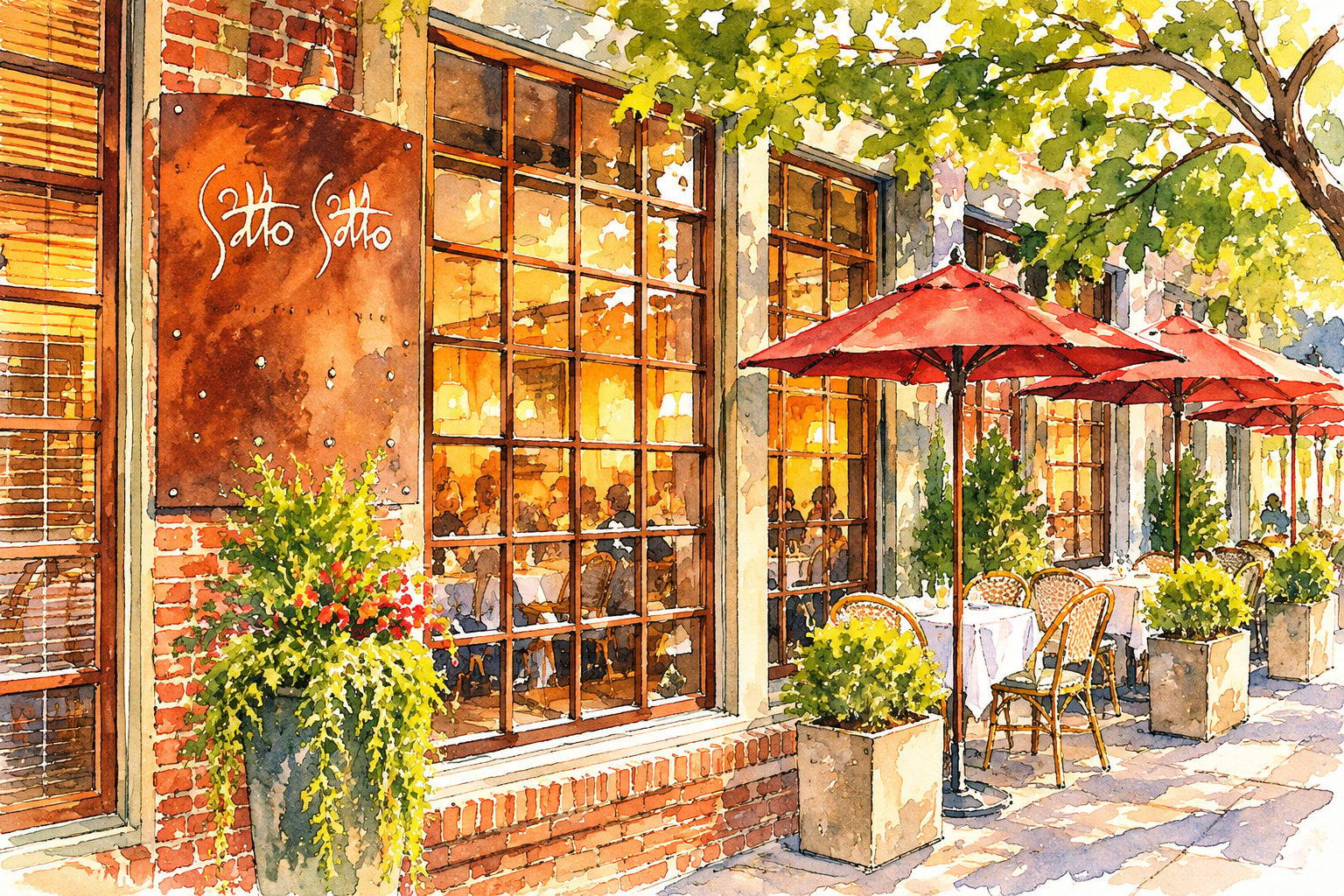
My Italian side insists I start here. For decades, Sotto Sotto has been one of Atlanta’s most consistent Italian dining rooms, with a low ceiling, warm light, and the kind of quiet buzz that makes you lean in. Chef Riccardo Ullio’s menu leans traditional: classic pastas, acqua pazza ("crazy water," fish poached in a bright tomato broth), and true gelato artigianale. It’s the place for an anniversary, a promotion, or a "just because." Book ahead. Buon appetito!
313 N. Highland Ave. NE, Atlanta, GA 30307 · (404) 523-6678· sottosottoatl.com
Wrecking Bar Brewpub
Where else can you drink house-brewed beer in the basement of a Victorian mansion? The Victor H. Kriegshaber House on Moreland Avenue has lived a few lives: a home, a church, a dance studio, and an architectural salvage store. Now it’s the Wrecking Bar Brewpub, with beer brewed on-site and locally sourced pub fare. Grab a seat, order whatever’s seasonal, and toast the people who refused to let this house be torn down.
292 Moreland Ave. NE, Atlanta, GA 30307 · (404) 221-2600 · wreckingbarbrewpub.com
Where the Treasures Hide
Bill Hallman
Atlanta designer Bill Hallman has been dressing intown Atlanta for decades, and his Inman Park boutique is a homecoming of sorts: he had a studio at this same address back in the 1990s. Expect his own label alongside a curated mix of domestic and international designers for men and women, plus a corner for made-to-measure menswear. Come for a gift, leave with a new outfit.
299 N. Highland Ave. NE, Atlanta, GA 30307 · billhallman.com
Whitespace Gallery
Tucked into a renovated carriage house on Edgewood Avenue, Whitespace has been an Inman Park staple for contemporary art. Its exhibitions spill into satellite spaces and even the garden out back, so wander. Whether you collect seriously or just love a good conversation with a painting, it’s one of the most peaceful hours you can spend in Atlanta.
814 Edgewood Ave. NE, Atlanta, GA 30307 · (404) 688-1892 · whitespace814.com · Thursday–Saturday, 11 a.m.–5 p.m.
The Festival That Saved a Neighborhood
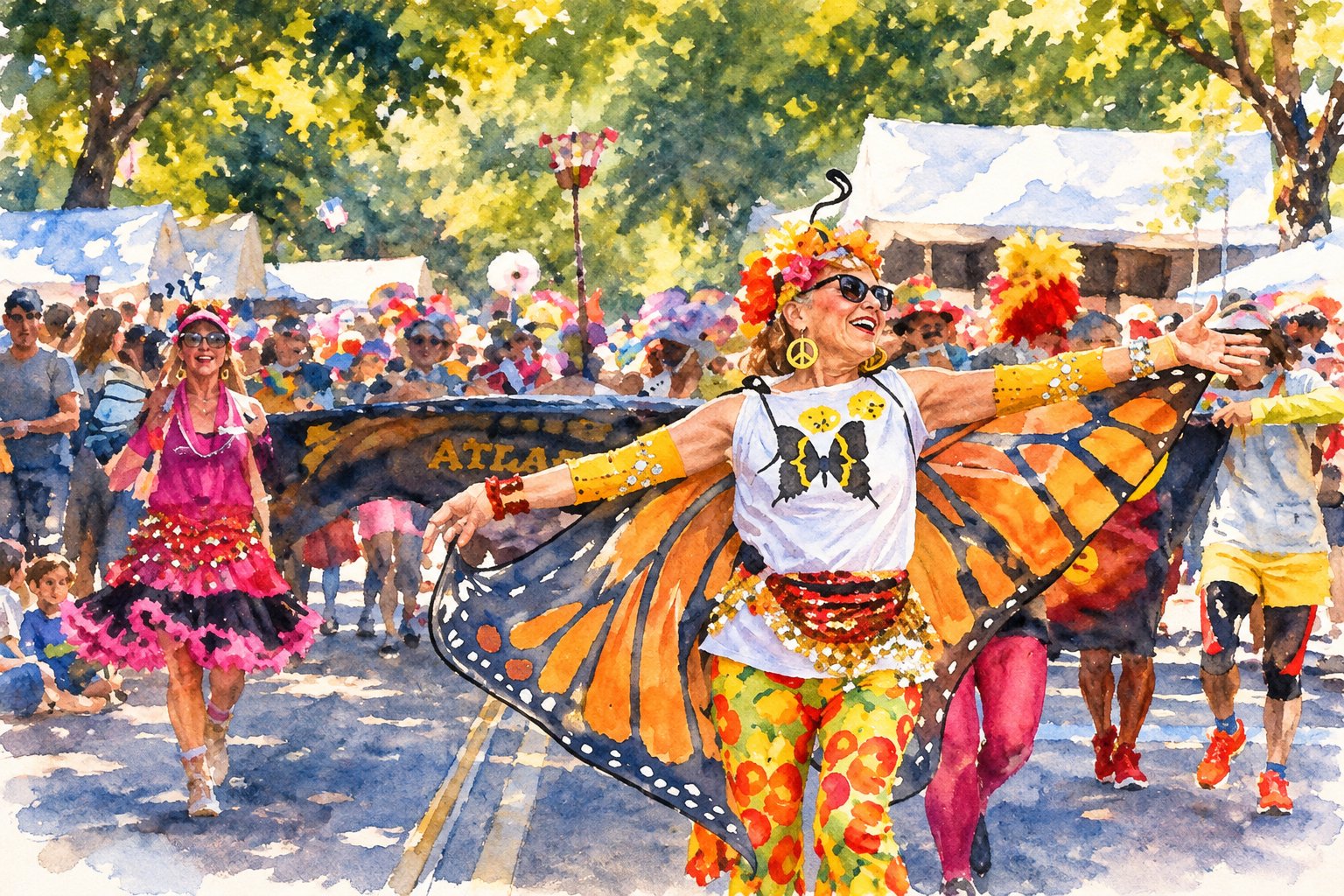
If you do only one thing in Inman Park, do it on the last full weekend of April. The Inman Park Festival & Tour of Homes began in the early 1970s as a way to draw attention to the restoration, and its proceeds helped pay the lawyers who stopped the highway. Today it’s Atlanta’s largest all-volunteer festival, with a juried arts market, three music stages, free dance performances inside the historic Trolley Barn (Atlanta’s first streetcar barn, built in 1889), and a Saturday parade led by the gloriously unruly Seed and Feed Marching Abominable. Buy a Tour of Homes ticket and walk inside the Victorians that the urban pioneers rescued. Mark your calendar: the 2027 Tour of Homes runs April 23–25, and the festival fills the streets Saturday and Sunday, April 24–25.
Can’t wait until spring? The Atlanta Preservation Center offers guided walking tours of Inman Park year-round, or print out the original 1972 walking tour script from the festival website and let the founders show you around themselves.
Inman Park Festival & Tour of Homes · festival.inmanpark.org · Festival admission is free; the Tour of Homes is ticketed
WHERE THE TWO ROADS MEET
A closing note
Here’s what keeps striking me about these two. Joel Hurt built Inman Park so the wealthiest families in Atlanta could live somewhere beautiful. A generation later, Black professionals built Just Us because the city wouldn’t let them live just anywhere, so they made somewhere beautiful themselves. One neighborhood began with a streetcar. The other began with a deed from a college. And when the bulldozers and the highway engineers came calling, both had neighbors who stood in the road and said no.
That’s the thing about Atlanta’s 244 neighborhoods. The plaques tell you what happened. The neighbors tell you why it mattered. So go see both. Walk the loop on Fountain Drive, then walk the curves of Euclid Avenue. Eat fried chicken where history was planned, and pasta where Coca-Cola royalty once strolled. Then come tell me which road made all the difference for you.
The Hunt Is Over.
Shawn Morgan
Luxury Residential Real Estate · Compass Atlanta
404-844-9086 · [email protected]
#BeyondTheBeatenBoulevard #JustUsNeighbors #InmanPark #AtlantaHistory #WestsideATL #IntownAtlanta #BlackHistoryATL #AtlantaNeighborhoods #TheHuntIsOver #CompassAtlanta
A thorough grasp of residential real estate marketing tactics, a keen knowledge of the Atlanta market, superior listening skills and attention to detail, make him the model Realtor® advisor. Contact Shawn today!
Let's ConnectAddress
1491 Peachtree St. NE
Atlanta, Georgia 30309