BEYOND THE BEATEN BOULEVARD
Two Roads Diverged: Cabbagetown & the Westside
A mill village and a reclaimed warehouse frontier, and why the detour is always worth taking
Robert Frost told us that two roads diverged in a yellow wood. In Atlanta, they diverge at Five Points, one heading east toward the smokestacks of Cabbagetown and the other heading west along the old Marietta Road, where the city once surrendered and later rebuilt itself out of brick, rail, and stubbornness. Most folks pick one and never look back. I have never been very good at that. My Hoptown upbringing taught me that the best stories are usually found on the road your mama told you not to bother with, and twenty-plus years of studying Atlanta's 244 neighborhoods has only confirmed it.
So this month, we take both roads. To the east, Cabbagetown: a mill village built on the ashes of a Confederate ironworks, abandoned by the industry that created it, and stubbornly, joyfully reborn by the people who stayed. To the west, the Westside: a landscape of stockyards and slaughterhouses, a freedmen's settlement with an ironic name, and a granite quarry that now quietly holds the city's emergency drinking water. Two neighborhoods. Two very different paths. One shared truth: neither of them is what you think it is.
Pour yourself something nice. We're going the long way.
Part One: Cabbagetown
The Mill Village That Refused to Be Forgotten
Built on the Ashes of a Rolling Mill
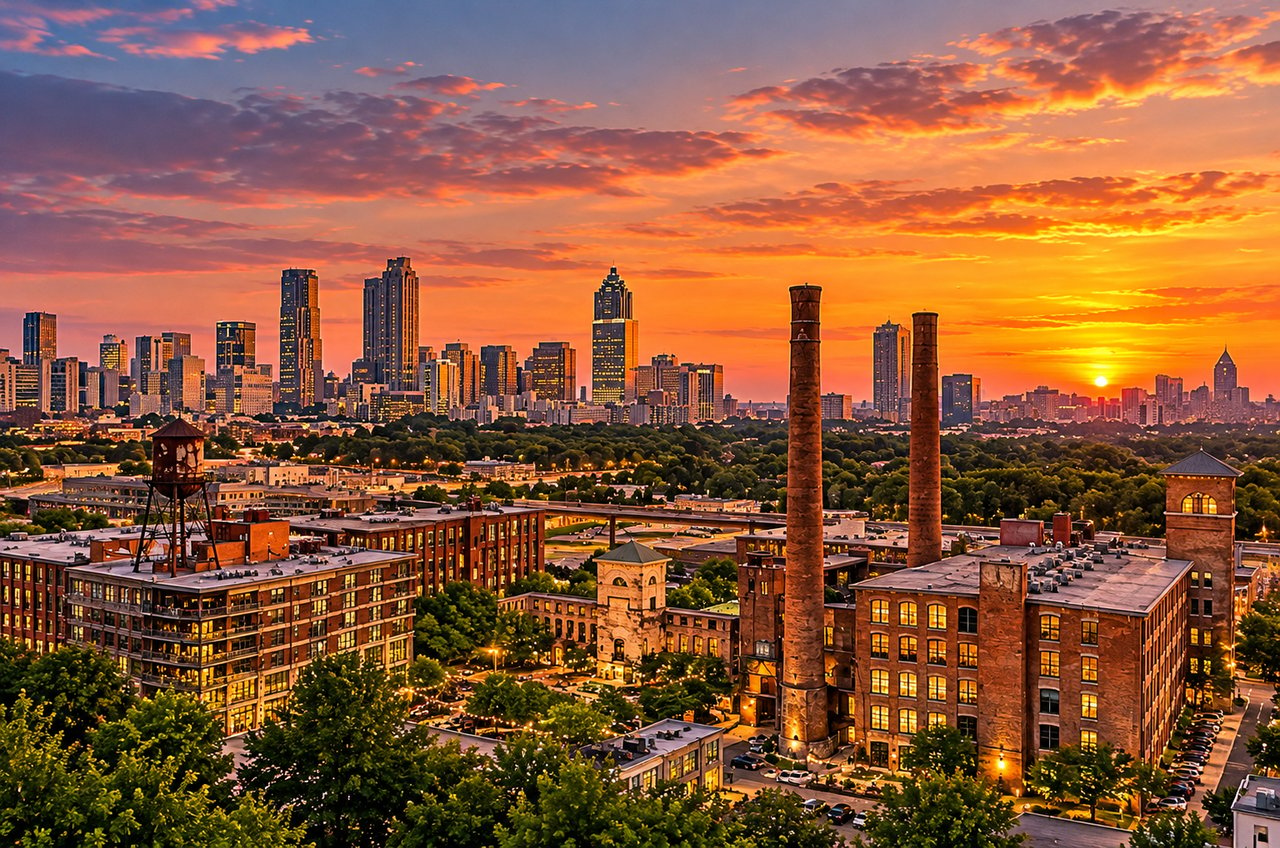
Every Cabbagetown story begins with fire. Before there was a neighborhood here, there was the Atlanta Rolling Mill, a Confederate ironworks that was destroyed in the aftermath of the Battle of Atlanta. For years the site sat scarred and empty on the eastern edge of the city, a reminder of what war had taken. It would take an immigrant with a vision, and a willingness to build where others saw only ruin, to give this ground a second life.
A German Immigrant and a Spinning Dream
That immigrant was Jacob Elsas, a German-Jewish businessman born in Württemberg in 1842. In 1876 he acquired the charter of the Fulton Cotton Spinning Company, and with financial backing from a Cincinnati banker, he moved his operations onto the old rolling mill site. The mill began running in 1881, the same year Atlanta hosted its International Cotton Exposition, and added a bag factory in 1882. By 1889 the business had a new name, Fulton Bag and Cotton Mills, and it is often remembered as one of the South's first textile processing mills. At its height the complex employed 2,600 workers and processed a thousand bales of cotton every week.
A Village of Narrow Streets and Mountain Ways
Where there is a mill, there must be a mill village. Elsas built a compact community of one- and two-story shotgun houses and cottages around the factory, first known as Factory Town or Fulton Mill Village. The earliest dwellings stood on five small blocks south of the mill called the Factory Lot. The workers came largely from the mountains of rural north Georgia, many of Scots-Irish descent, and they brought their Appalachian traditions with them: their music, their faith, and their kitchen gardens. The mill maintained the village and provided sanitation, security, medical and dental offices, a nursery, and a library. The streets were narrow, the blocks were short, and everyone knew everyone. In many ways, they still do.
The Strike, the Slow Decline, and the Locked Gates
Mill life was hard but steady, until it wasn't. On May 20, 1914, after the company fired more than one hundred union members, several hundred millworkers walked out. The strike lasted nearly a full year and ended in failure on May 15, 1915; many strikers never worked at Fulton Bag again. In the 1950s, the mill sold off its worker housing, much of it to absentee landlords. Control of the company passed to outside investors in 1956, the last bag printed in Atlanta rolled off the presses in November 1958, and Elsas family management ended in 1968. By the late 1970s, the mill had locked its iron gates for good. The village that had depended on it for everything began to fray.
Artists, Musicians, and the Long Road Back
But Cabbagetown has always known how to take care of its own. In 1971, Esther Lefever founded The Patch, a neighborhood self-help society that stepped in where the mill had stepped out. In 1976, the Cabbagetown District was listed on the National Register of Historic Places. In the 1980s, artists and musicians discovered the low rents and narrow streets, among them Panorama Ray, who ran a photo gallery on Carroll Street. Beginning in 1996, the mill itself was reborn as the Fulton Cotton Mill Lofts, billed as the nation's largest residential loft community. A fire damaged one building in 1999, and on March 14, 2008, an EF2 tornado tore through the complex and many of the historic homes around it. Cabbagetown answered the way it always has: it rebuilt, and then it threw a party.
Five Things Most Atlantans Don't Know About Cabbagetown
1. Nobody agrees on the name. One story credits the smell of cabbage cooking in mill workers' kitchens. Another credits a woman called "Peanut" Brown, who peddled produce door to door after arriving in 1919 and found cabbages sold best. Folklore offers an overturned truck full of cabbages. And Jake Elsas, the founder's great-great-grandson, believes his research points to something less charming: a derisive label from a Northern newspaper reporter mocking the poor Scots-Irish mill workers during the strike.
2. Some of the first houses were shipped in. The mill originally brought in four-family houses from mill towns in the Northeast. Because the mill owned the land and rented to workers, the original blocks were never subdivided into individual parcels, which is one reason Cabbagetown's lot lines look like no other neighborhood in Atlanta.
3. The mill was a cradle-to-grave company town. Beyond jobs and housing, Fulton Bag ran medical and dental offices, a nursery, and a library for its workers, and it maintained the village lawns. It was paternal, protective, and controlling all at once.
4. "The Stacks" is a history lesson. The for-sale condominiums in the old mill complex are called The Stacks, named for the mill's smokestacks that still rise over the neighborhood. The name was chosen to set them apart from the rental lofts.
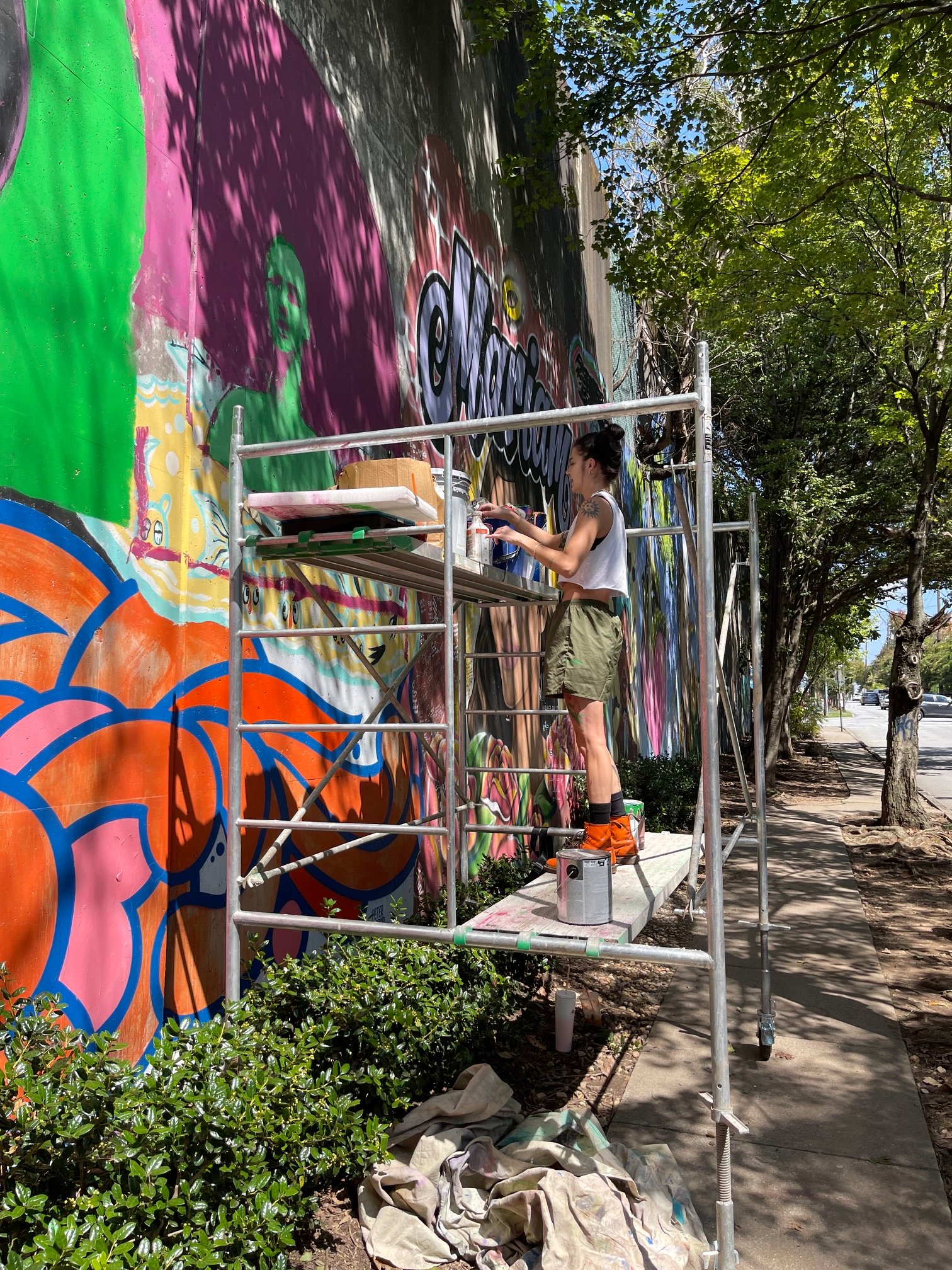
5. The walls change every year. Through Forward Warrior and Stacks Squares, more than 150 artists have painted Cabbagetown's walls along Wylie and Tennelle Streets, adding more than 50 new murals a year. Every one is original, hand-painted, and non-commercial, which means the neighborhood's outdoor gallery is never quite the same twice.
Where to Pull Up a Chair
Carroll Street Café
Carroll Street is so narrow that two-way traffic becomes an act of faith, and right in the middle of it sits Carroll Street Café, perhaps the most beloved restaurant in Cabbagetown. It is a European-style bistro with a cozy room and sidewalk tables perfect for people-watching. Weekends belong to brunch, and the crab cake Benedict with a mimosa has a devoted following. In the evening, the menu turns to small plates and conversation. Sit outside, look up at the old mill smokestacks, and let the afternoon take its time.
208 Carroll St. SE, Atlanta, GA 30312 · (404) 577-2700 carrollstreetcafe.com
Petit Chou
The name means "little cabbage," which tells you everything about this café's sense of place and sense of humor. Its founders once stood at the corner of Memorial Drive and Powell Street looking at nothing but forlorn industrial buildings, and they decided to build a neighborhood bistro anyway. The menu is French-ish meets Southern-ish, made with local ingredients and paired with very good coffee. Order the croque madame or chef Diana Presson Eller's celebrated "Whole Chou" salad, and stay for a second cortado.
662 Memorial Dr. SE, Atlanta, GA 30312
Where the Treasures Hide
Little's Food Store
In business since 1929, Little's is the corner market every neighborhood wishes it still had. It sells beer, snacks, and groceries, and it grills some of the best little burgers in Atlanta. Look for the knight's armor and the hanging spider decorating the exterior, a perfect introduction to Cabbagetown's personality. The same corner, then called Cabbagetown Market, even turned up on Diners, Drive-Ins and Dives back in 2008. Go for a slider basket; leave with a story.
198 Carroll St. SE, Atlanta, GA 30312 · (404) 963-7012 · littlesfoodstore.com
Brother Moto
Brother Moto began in 2013 when two friends kept leaving motorcycle parts across a Cabbagetown apartment parking lot, much to management's dismay. Today it is part DIY motorcycle garage, part coffee shop, and part lifestyle goods store, with shirts, mugs, and gear for riders and the "moto-curious" alike. You do not need to own a bike to love it. Grab a coffee, browse the goods, and watch someone lovingly rebuild a vintage engine through the window.
670 Memorial Dr. SE, Atlanta, GA 30312 · brothermoto.com
Walking With the Ghosts of the Mill
If you do only one thing in Cabbagetown, take a walking tour with The Patch Works Art & History Center. It was founded by Jake Elsas, the great-great-grandson of the man who built the mill, along with his wife, curator Nina Elsas. They gathered relics and photographs from longtime Cabbagetown families to tell the story of Atlanta's oldest industrial settlement through the eyes of the people who lived it. Tours offer special access to the mill and insider knowledge you simply won't find on a plaque. There is something profoundly moving about hearing the workers' story told by the founder's own descendant. It is history as an act of reconciliation.
The Patch Works Art & History Center · 170 Boulevard SE, Unit E311, Atlanta, GA 30312 · Tour schedules vary: thepatchworks.org · [email protected]
Discover Cabbagetown
Chomp & Stomp · Saturday, November 7, 2026 · 11 a.m. to 7 p.m.
If you want to understand Cabbagetown in a single day, come hungry on the first Saturday in November. Chomp & Stomp began in 2003, dreamed up by neighbors, and has grown into one of Atlanta's most anticipated fall festivals. The formula is gloriously simple: a fiercely competitive chili cook-off, lively bluegrass music, the Romp 5K run, and a vibrant Artist Market, all set in the heart of a neighborhood whose mill-town ancestors carried their mountain music down from north Georgia more than a century ago. It is a free outdoor music festival, and it feels exactly like a block party that grew up but never got too big for its britches.
What makes Chomp & Stomp truly special is what happens behind the scenes. The entire festival is run by volunteers, many of them Cabbagetown residents, which keeps the spirit of the day true to its roots. And every bowl of chili does some good. The festival is a vital fundraiser for the Cabbagetown Initiative Community Development Corporation, a 501(c)(3) nonprofit that maintains and develops the neighborhood's parks and green spaces and even provides an emergency home repair fund for residents in need. In a neighborhood that once depended on a mill for everything, it is neighbors now who take care of neighbors.
My advice? Leave the car behind if you can, wear comfortable shoes, bring an appetite and an opinion about chili, and plan to wander. Walk through the Krog Street Tunnel, admire the murals along Wylie Street, cheer on the runners, and stay for the music as the afternoon light settles on the old smokestacks. Volunteers are always welcome, so if you've ever wanted to feel like a Cabbagetowner for a day, this is your invitation.
Cabbagetown Chomp & Stomp · Saturday, November 7, 2026, 11 a.m. to 7 p.m. · Cabbagetown Neighborhood, 650 Gaskill St. SE, Atlanta, GA 30316 · chompandstomp.com
Part Two: The Westside
Where the City Surrendered, Labored, and Learned to Begin Again
The Road Where Atlanta Laid Down Its Arms
Much of Atlanta's Civil War history happened on the land we now call the Westside. Sherman's army moved along the very rail lines that still cut through the area, and on September 2, 1864, with the Confederate army gone and the city exhausted from weeks of siege, Mayor James M. Calhoun rode out from Five Points along Marietta Road with a small delegation. He deliberately chose residents known for Unionist sympathies, along with an enslaved man named Bob Yancey, to signal that Atlanta was not just any Southern city. They met Federal troops on the northwestern edge of town and surrendered Atlanta, asking only for protection of noncombatants and private property. A marker erected in 1958 still stands near the intersection of Marietta Street and Northside Drive. Most people drive past it without ever knowing it's there.
The Settlements That Rose From the Ashes
In the years after the war, small residential settlements grew up along the tracks, among them Knight Park/Howell Station, Underwood Hills, and Blandtown. Blandtown, centered on Huff Road between Howell Mill Road and Marietta Boulevard, was one of the first Black settlements in post-Civil War Atlanta. It was named for Felix Bland, a freedman to whom Mrs. Viney Bland left the land in her will. Families built homes, churches, and businesses there, and a stretch of Huff Road was even known as Blandtown Road in the neighborhood's heyday. It thrived for generations, a community of resilience carved out of the most uncertain of beginnings.
The Smell of Industry, the Sound of Work
By the late 1800s, the Westside had become Atlanta's industrial engine. Slaughterhouses, factories, warehouses, and rail yards dominated the landscape. The Miller Union Stockyards covered a full city block in the meatpacking district. In 1910, William White Jr. built the White Provision Company plant on Howell Mill Road, expanding it in the 1920s in the Industrial Gothic style. In 1917, the United Butchers Abattoir rose nearby. These were not glamorous places. They were loud, hardworking, and essential, and they brought jobs to the families of Blandtown and the surrounding settlements.
When the Map Turned Against Its People
Then the tide turned. A fire swept through Blandtown in 1928, burning fifteen homes, two restaurants, and a church. The City of Atlanta annexed Blandtown in 1952 and, just four years later, rezoned it for heavy industrial use. Heavy industry moved deeper into the neighborhood, homes were demolished or fell into disrepair, and many of its families moved to other parts of the city. Encroaching rail lines, interstate construction, and industrial rezoning turned Blandtown, Knight Park, and Underwood Hills into residential islands. Even the grand White Provision building slid from meatpacking plant to bonded warehouse in 1963, and finally to U-Haul storage in 1991. For decades, most of this area was known simply as the warehouse district, or by the names of its streets.
The Second Act Nobody Saw Coming
Artists arrived first, as they so often do, drawn by cheap space, high ceilings, and that particular quiet only an abandoned warehouse can offer. Galleries and studios followed, then restaurants with serious ambitions. In 2007, Sid and Ann Mashburn opened their menswear flagship on Howell Mill Road. In 2008, a footbridge stitched together the old White Provision building and the newer Westside Urban Market, forming the Westside Provisions District. And in 2021, the city opened the first phase of Westside Park around the old Bellwood Quarry. The Westside did not erase its industrial past. It moved back in, polished the brick, kept the bones, and invited the rest of Atlanta to dinner.
Five Things Most Atlantans Don't Know About the Westside
1. Atlanta's surrender freed a man. When Mayor Calhoun rode out to surrender the city, Bob Yancey rode with him. Everyone in that delegation surely understood that the moment Atlanta fell, Bob Yancey would become a free man. North and South, free and unfree, all on one dusty road.
2. Blandtown is anything but bland. The name has nothing to do with being boring. It honors Felix Bland, a freedman who inherited the land, and the neighborhood was one of the first Black settlements in Atlanta after the Civil War.
3. The Goat Farm is older than you think. The beloved Goat Farm Arts Center is actually a late-19th-century industrial complex that sits within historic Blandtown.
4. Your dinner is on the old stockyards. Miller Union restaurant is named for, and housed on the former site of, the Miller Union Stockyards. And the stylish White Provision building at Westside Provisions? It was a meatpacking plant, a bonded warehouse, and a U-Haul storage center before it ever sold a cashmere sweater.
5. "West Midtown" is a newcomer. The name is not official, and it remains a matter of debate. For decades, locals called this area the Westside, the warehouse district, or simply by its street names, Chattahoochee, Marietta, Huff. The neighborhoods underneath the brand, Home Park, Blandtown, and Howell Station among them, were here first.
Where Brick Meets Brilliance
Bacchanalia
If the Westside has a grande dame, it's Bacchanalia. Anne Quatrano and Clifford Harrison's James Beard-honored restaurant holds a Michelin star and a Michelin Green Star for sustainability, and much of what lands on your plate comes from the couple's own farm. The room is dark wood, brown leather banquettes, and a black industrial ceiling twinkling with Edison bulbs. The multicourse prix fixe arrives with a bit of theater, some dishes rolling in on carts or tucked beneath glass cloches. Order the crab fritter, which has been on the menu since the very beginning. Some things don't need to change.
1460 Ellsworth Industrial Blvd. NW, Ste. A, Atlanta, GA 30318 · (404) 365-0410 · starprovisions.com/bacchanalia
Miller Union
Chef Steven Satterfield and partner Neal McCarthy opened Miller Union in a refurbished warehouse on the site of the old stockyards, and it has been a perennial favorite ever since. Satterfield took home the James Beard Award for Best Chef: Southeast in 2017, McCarthy won the Michelin Guide's Service Award in 2023, and the restaurant remains Michelin-recommended. The menu is seasonal American with a Southern twang, built around whatever the farmers bring in that week. Start with anything involving cornbread and save room for the blondie. And notice how one of the two owners is almost always in the room. That's the secret.
999 Brady Ave. NW, Atlanta, GA 30318 · (678) 733-8550 · millerunion.com
Shops Worth the Detour
Star Provisions
Imagine having access to a great restaurant's pantry and walk-in cooler. That's Star Provisions, the gourmet market from the Bacchanalia team, sharing the same Ellsworth Industrial address. Individual counters for cheese, meats, seafood, wine, breads, and pastries, plus cookware and culinary treasures you didn't know you needed. Grab breakfast or a sandwich at the café, then wander. Fair warning: you will leave with more than you came for, and you will not regret a single bit of it.
1460 Ellsworth Industrial Blvd. NW, Atlanta, GA 30318 · starprovisions.com
Sid Mashburn
When Sid and Ann Mashburn headed south in 2007, they planted their menswear flagship right here on the Westside, and it became the seed of a small sartorial empire. Sid Mashburn is classic, edited, and impeccably made, the kind of store where the staff knows how a jacket should fit and will gently tell you the truth. Ann Mashburn's women's boutique sits just steps away. Even if you're not shopping, step inside. It's a masterclass in how to make old brick feel like home.
1198 Howell Mill Rd., Westside Provisions District, Atlanta, GA 30318 · mashburn.com
The Quarry That Holds the City's Breath
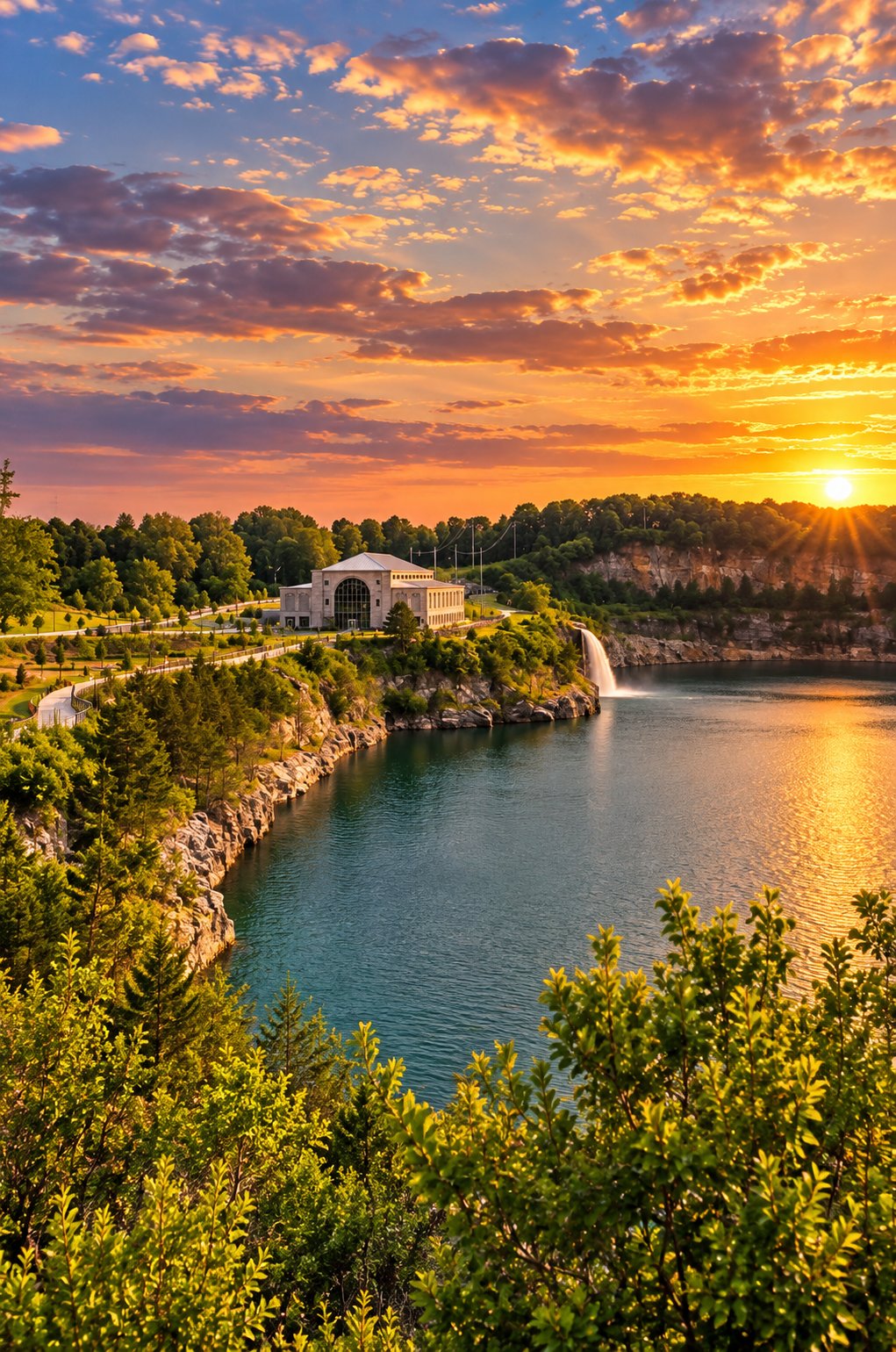
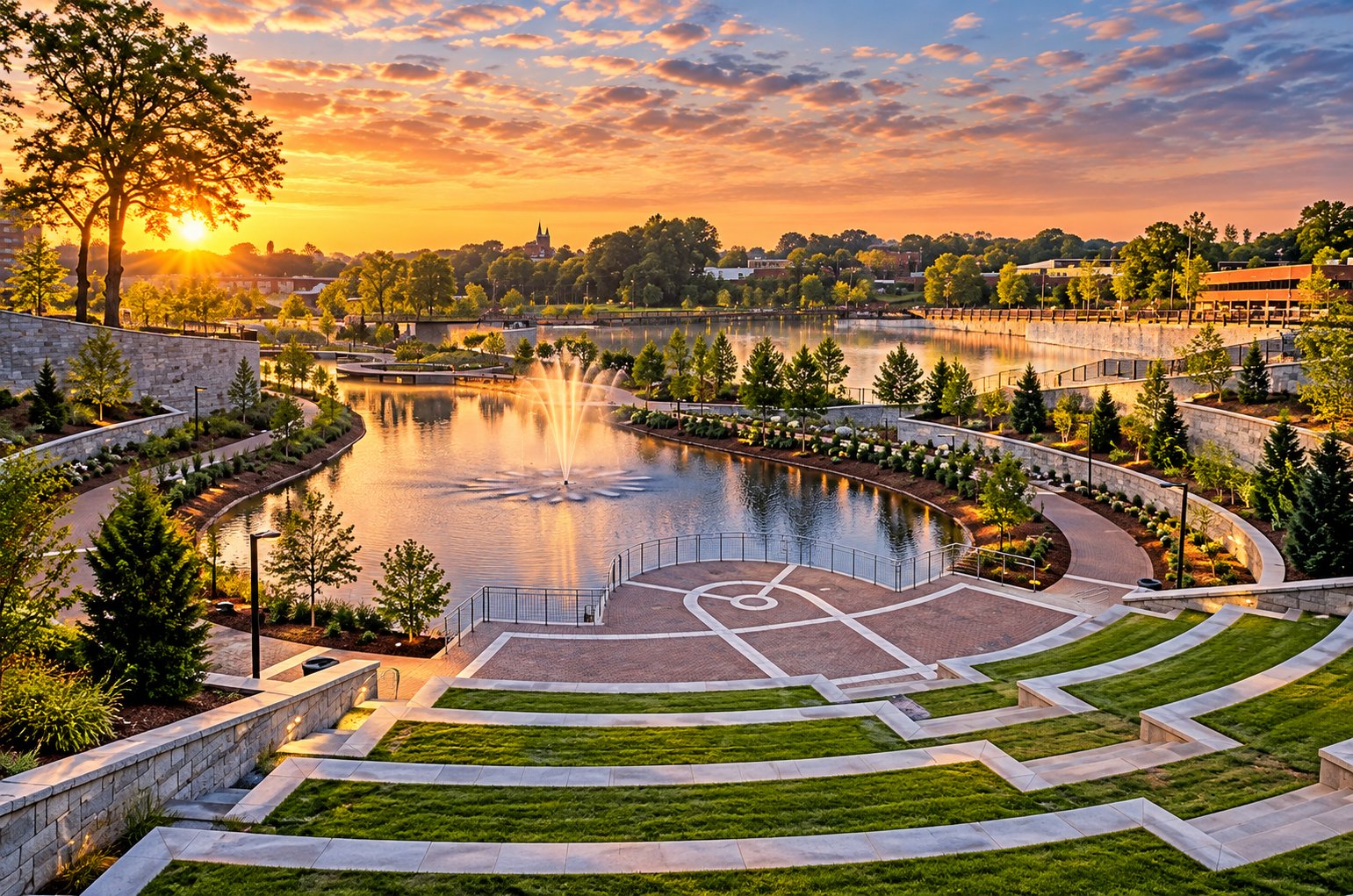
For more than a century, Bellwood Quarry was a granite pit on Atlanta's Westside, four hundred feet deep and largely forgotten except by film crews, who used its sheer walls and blue water in The Walking Dead, Stranger Things, and The Hunger Games. The city bought it in 2006. A tunnel-boring machine nicknamed Driller Mike carved a five-mile tunnel connecting the quarry to the Chattahoochee River and the Hemphill Water Treatment Plant. Today the quarry holds 2.4 billion gallons of water, expanding Atlanta's emergency drinking supply from about three days to more than thirty. Around it sits Westside Park, designed to eventually span 280 acres, a full hundred acres larger than Piedmont Park. Walk the trails to the Grand Overlook in the late afternoon and watch the Midtown and Downtown skylines glow above the water. It is, without exaggeration, one of the most breathtaking views in the city, and most Atlantans still haven't seen it.
Westside Park · Main parking: 1600 Johnson Rd. NW, Atlanta, GA 30318 · Open daily, 6 a.m. to 11 p.m. · Dog-friendly · No swimming; the reservoir is the city's emergency water supply
The Road That Made All the Difference
Cabbagetown lost the mill that built it and answered by becoming a village where neighbors take care of neighbors. The Westside watched its homes rezoned out from under it and answered by turning slaughterhouses into supper clubs and a quarry into a lifeline. Different roads, same lesson: a neighborhood is not defined by what it lost. It is defined by what it chooses to build next.
So take the road less traveled. Spend one afternoon wandering the narrow streets of Cabbagetown. Spend another standing above the quarry on the Westside. And if somewhere along the way you start wondering what it might be like to call one of these places home, well, you know where to find me. The hunt is over.
Shawn Morgan | Compass Atlanta | The Hunt Is Over™
Seven-Time Top Producer · Luxury Residential · Intown Atlanta Specialist
Intown Atlanta including Druid Hills · East Lake · Oakhurst · Downtown Decatur · Midtown · Virginia-Highland
shawnatl.com | 404-844-9086 | [email protected] | GA License #392009
#BeyondTheBeatenBoulevard
#ShawnATL
#CompassATL
#CompassAtlanta
#Cabbagetown
#ChompAndStomp
#WestsideATL
#WestMidtown
#Blandtown
#AtlantaHistory
#WestsidePark
A thorough grasp of residential real estate marketing tactics, a keen knowledge of the Atlanta market, superior listening skills and attention to detail, make him the model Realtor® advisor. Contact Shawn today!
Let's ConnectAddress
1491 Peachtree St. NE
Atlanta, Georgia 30309